How to Determine the Quality of an LED Display?
News
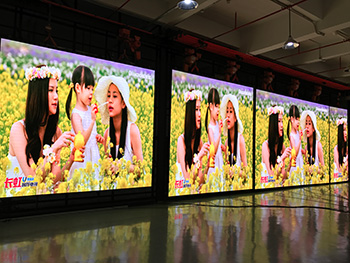
How to Determine the Quality of an Indoor or outdoor LED Display?
Brightness: Brighter isn’t necessarily better. While increasing the current can boost the brightness of the LEDs, this actually shortens their lifespan. Unscrupulous LED display vendors often start by cranking up the brightness to make the display look good at first glance, but such displays typically become unusable in less than a year. Therefore, the most important factor is brightness uniformity. Uniformity means the brightness is consistent across the screen, creating a soft, even appearance. View the screen from multiple angles in well-lit conditions; uneven brightness gives the display a “dirty” look, as if it hasn’t been cleaned properly.
2. Luminance Decay: This refers to whether the LED display maintains its original brightness after a period of use. If the brightness drops significantly below the original level, the quality is definitely subpar.
3. Drive Method: Constant-current drive is better than constant-voltage drive because LEDs are powered by current. Static display is brighter than 1/2 scanning, and 1/2 scanning is brighter than 1/4 scanning—though it’s also more expensive. The higher cost stems from power consumption and chip usage. Of course, the choice depends on your needs; the farther away the viewing distance, the higher the brightness required.
 Send Email
 18027665203
 Absinled